

JUNE 2025 - Puffins of Skomer
Last year, I visited Skomer Island for the first time on a Canon workshop with wildlife photographer Drew Buckley. I loved it so much that I decided to return this year, but this time I wanted to take my Mum so that she could experience it for the first time too.
Going without the knowledge of Drew (who knows this island like the back of his hand), I couldn’t quite remember which route was best to take, so we ended up going around the whole perimeter of the island. When you book the ferry, you are given a 5-hour time slot to explore before you have to get your return ferry back to the mainland. So when we landed and climbed the steps to our briefing, I was already concerned about running out of time.
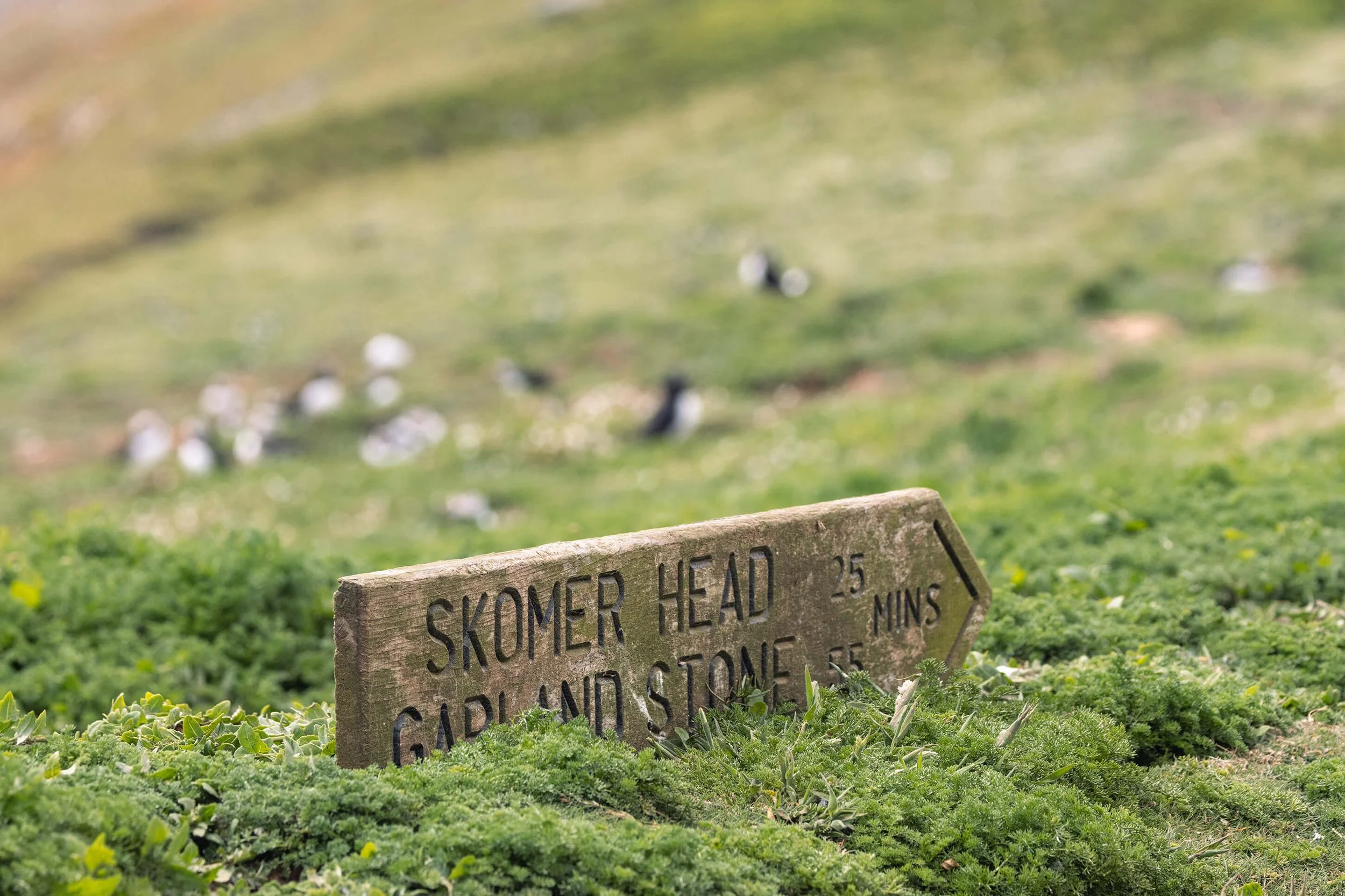
We marched up to the middle of the island, where the lodge (which requires booking well in advance if you wish to stay there) and the toilets are. From here, we set off North towards the Garland Stone. We passed a couple of inland ponds, which I hadn’t noticed before, as we had skipped this part completely the previous year. Unfortunately, you are not allowed near these ponds unless for research purposes, so despite looking out for Curlew (which I had been told are present here), I didn’t spot any.
The North side of the island is slightly less populated, so panicking about time, I rushed through in the hopes of reaching more puffins. Although there are fewer puffins on this side, there are still some really beautiful views, making it worth the extra steps to see this part of the island. Eventually, we reached Skomer Head and past there, my favourite spot, The Wick.
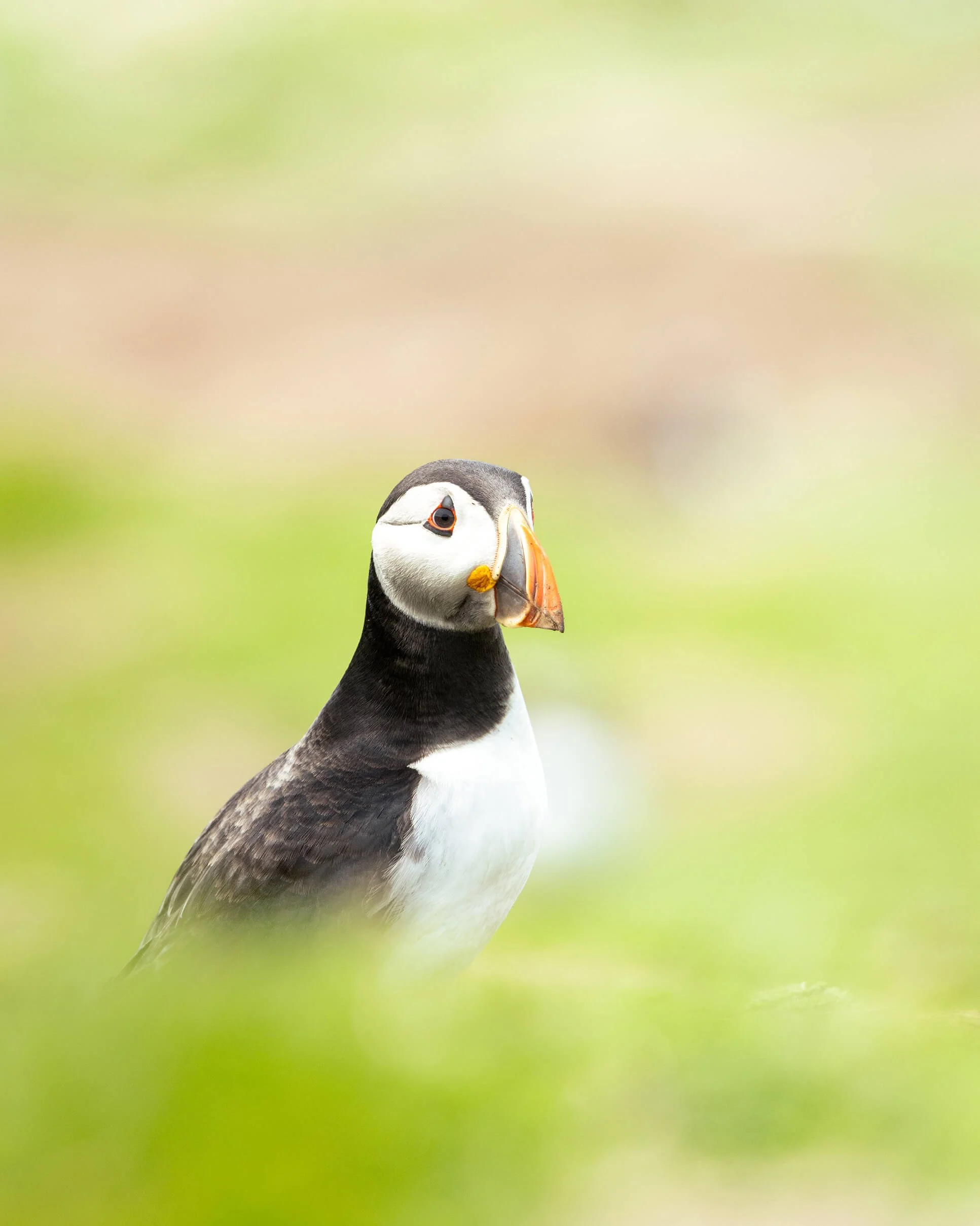
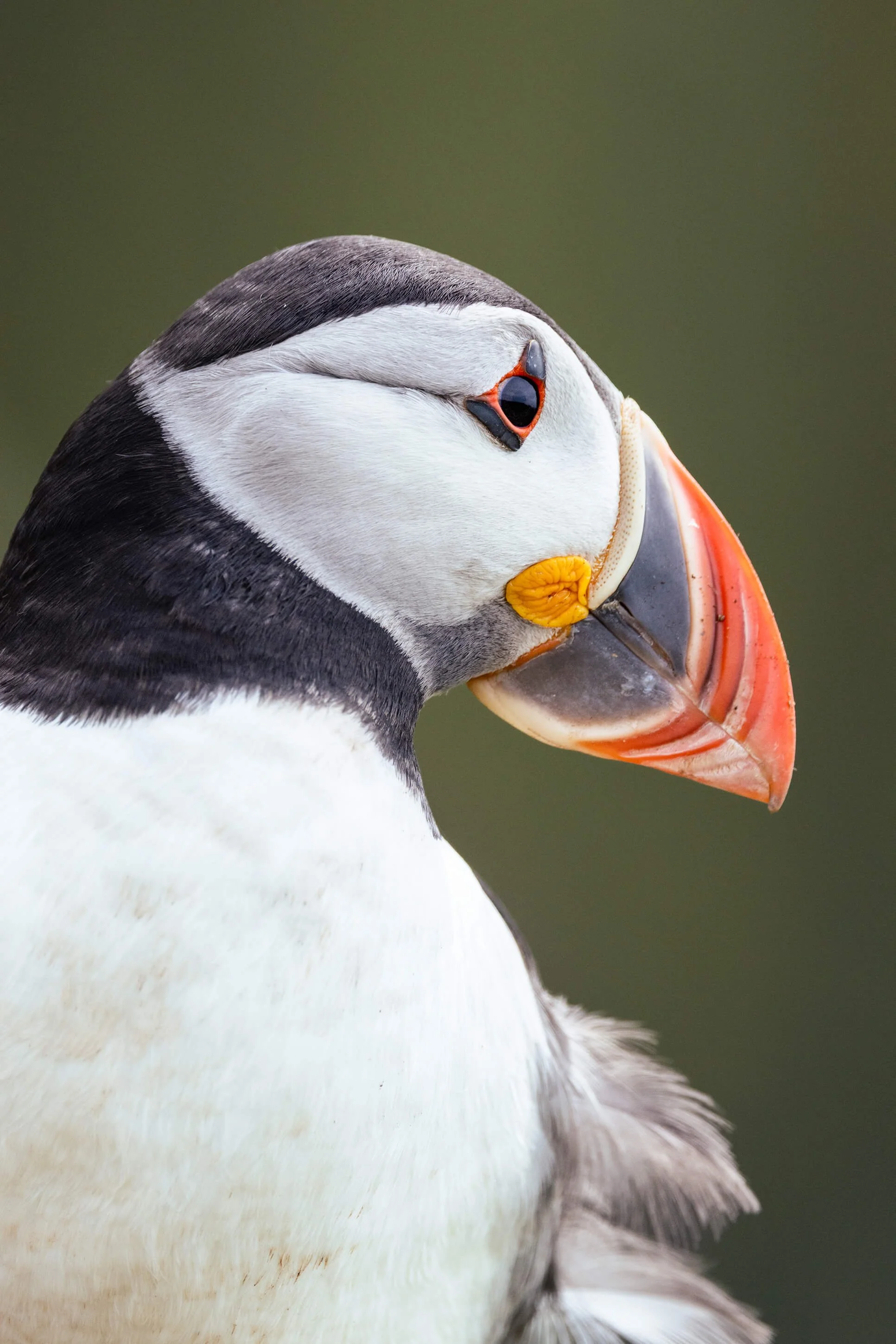
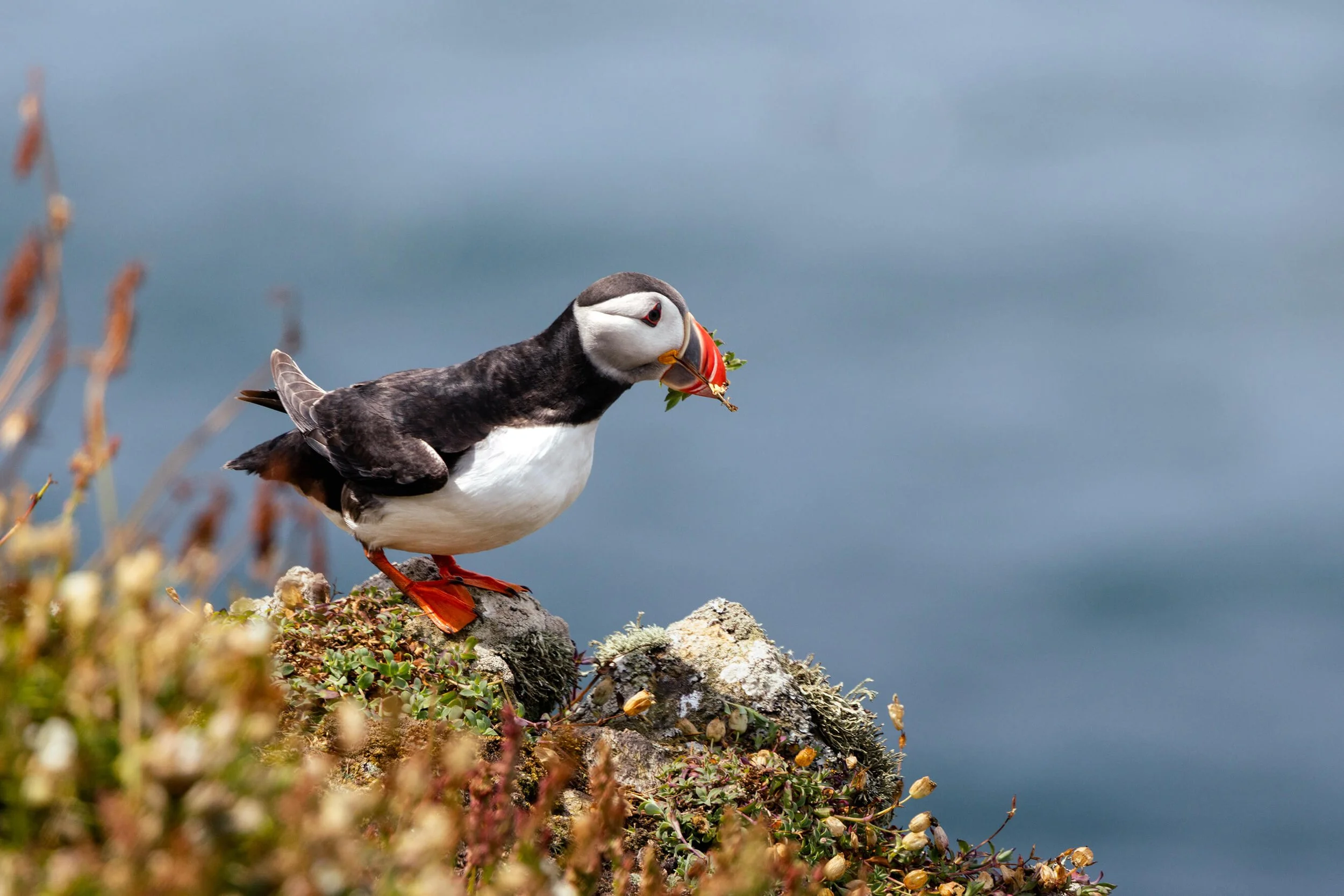
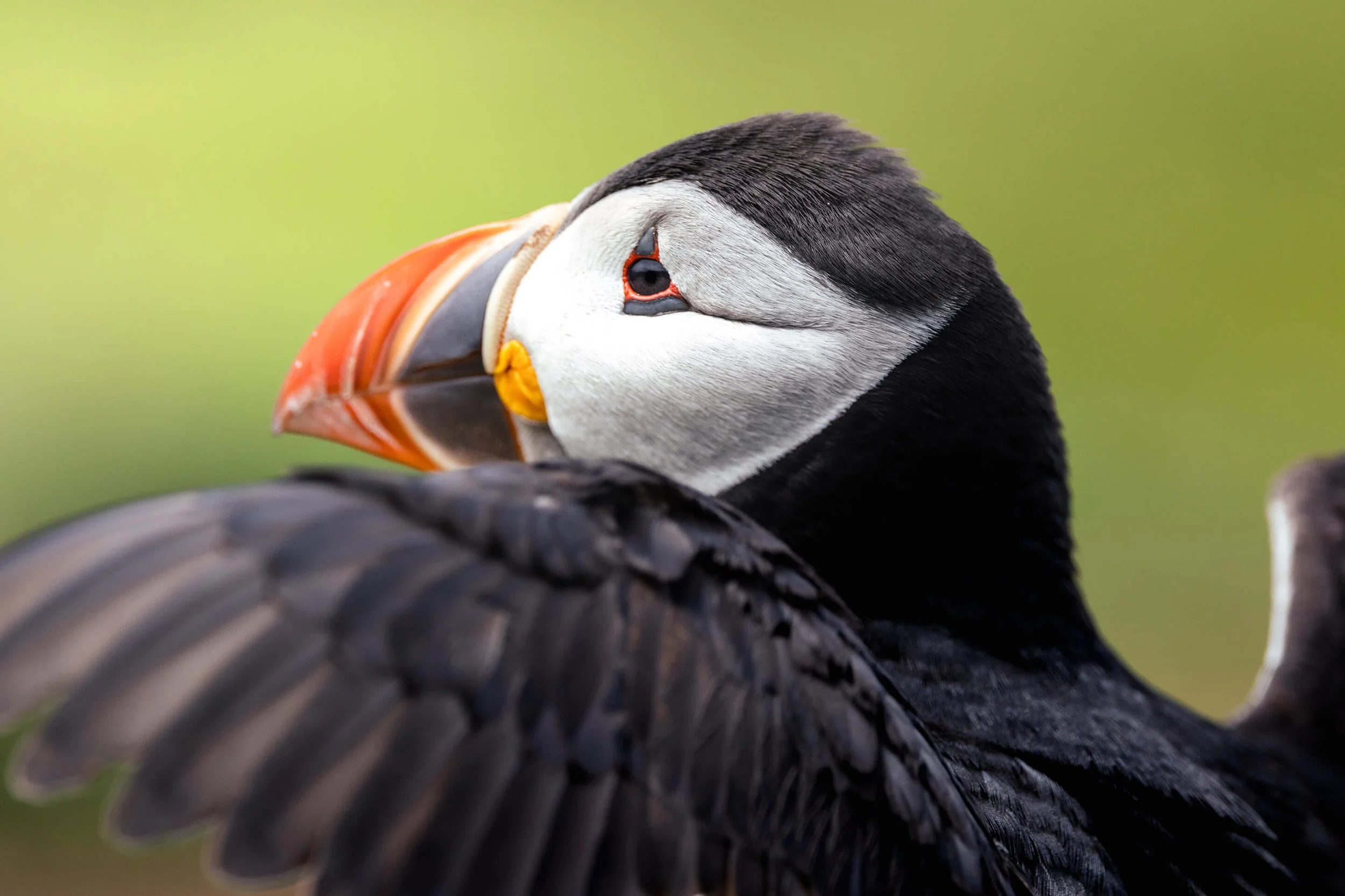
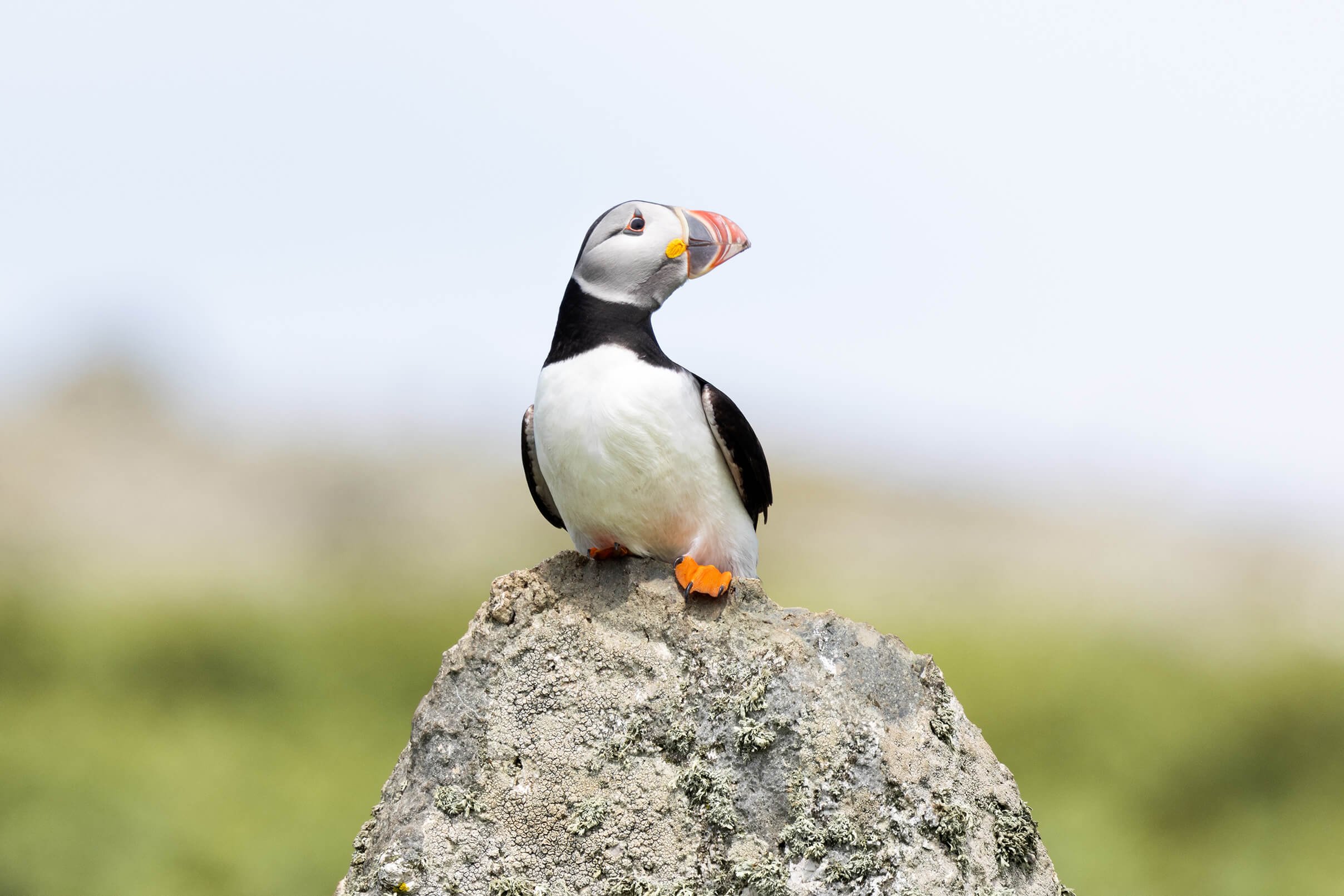

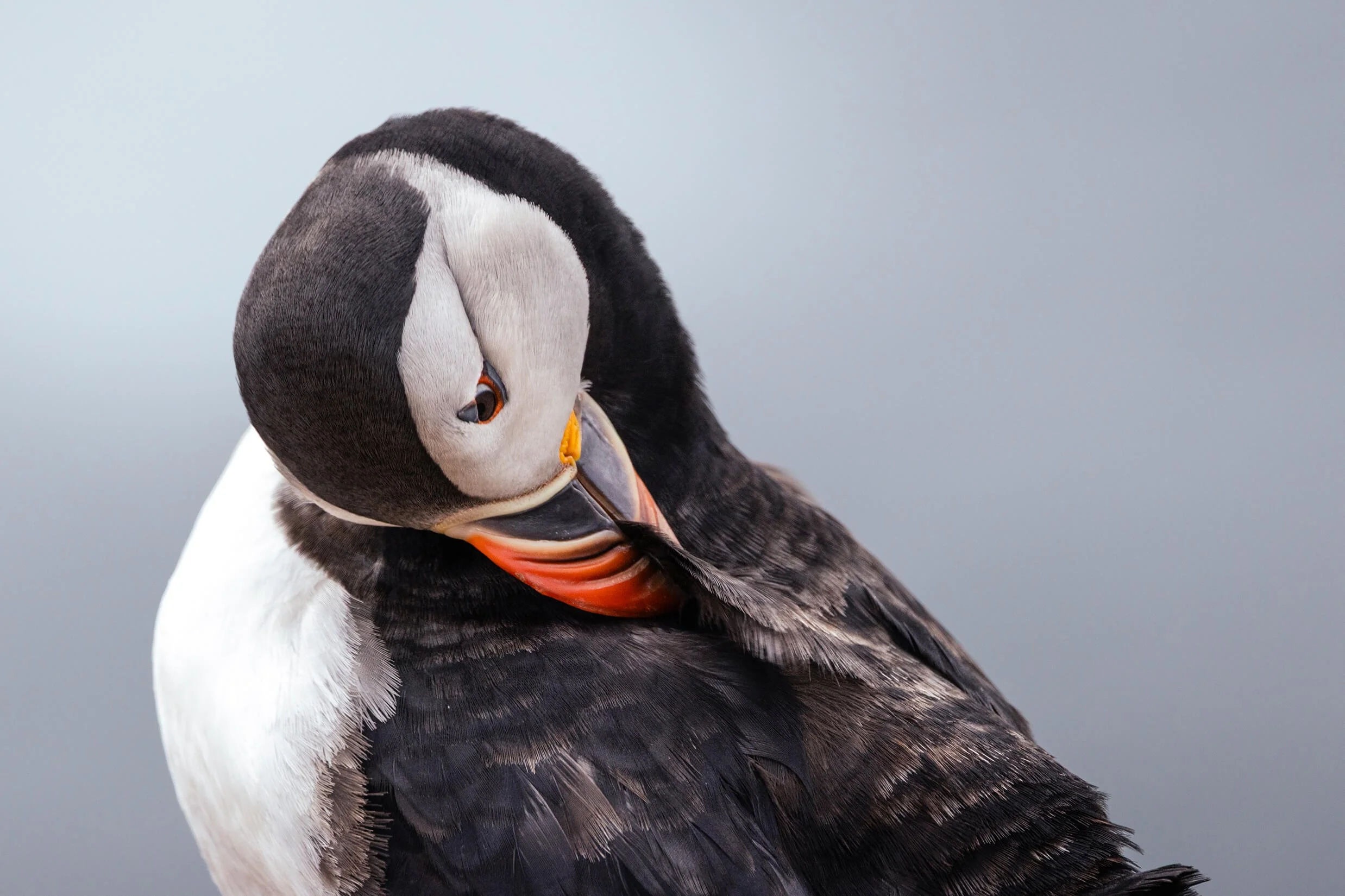

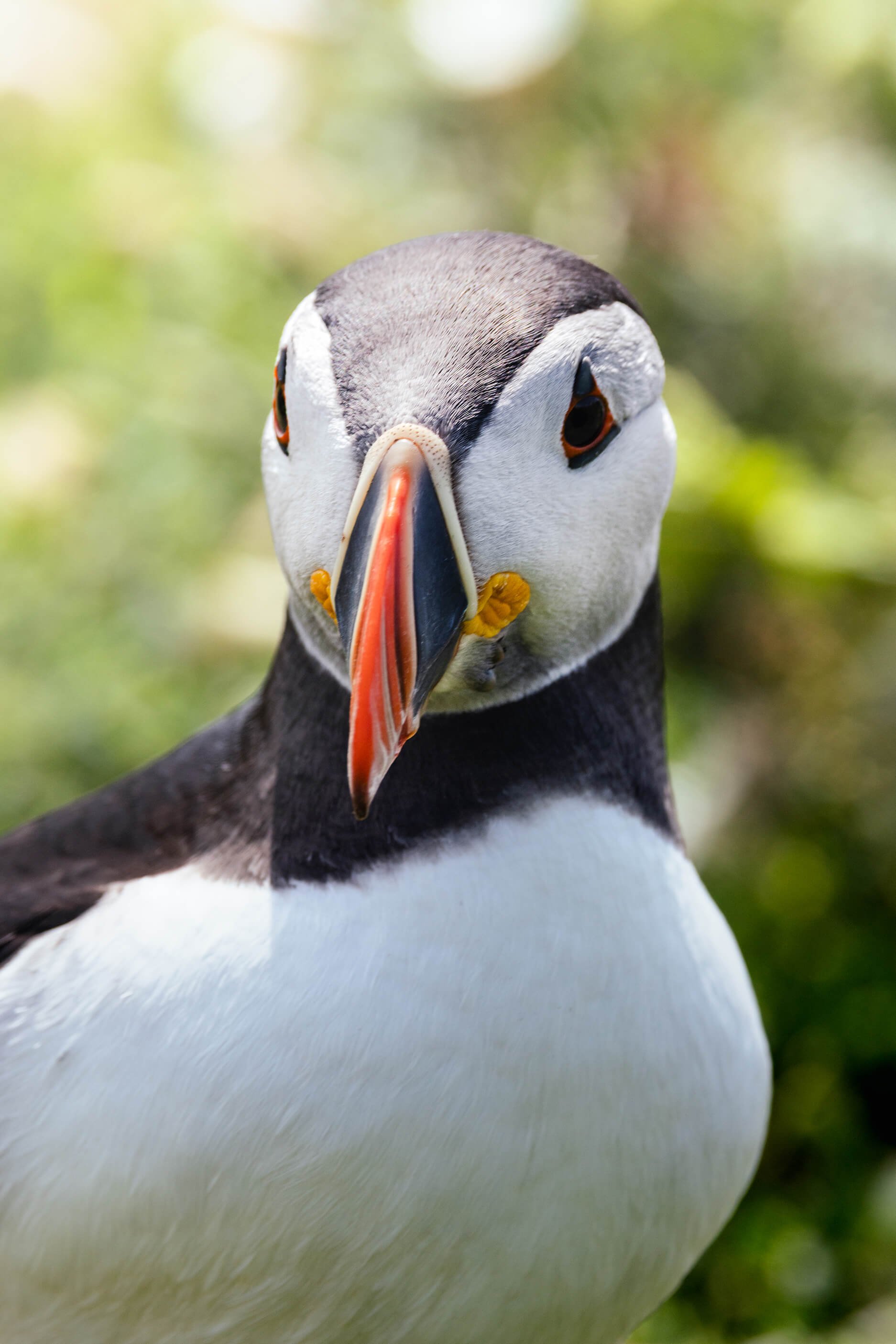


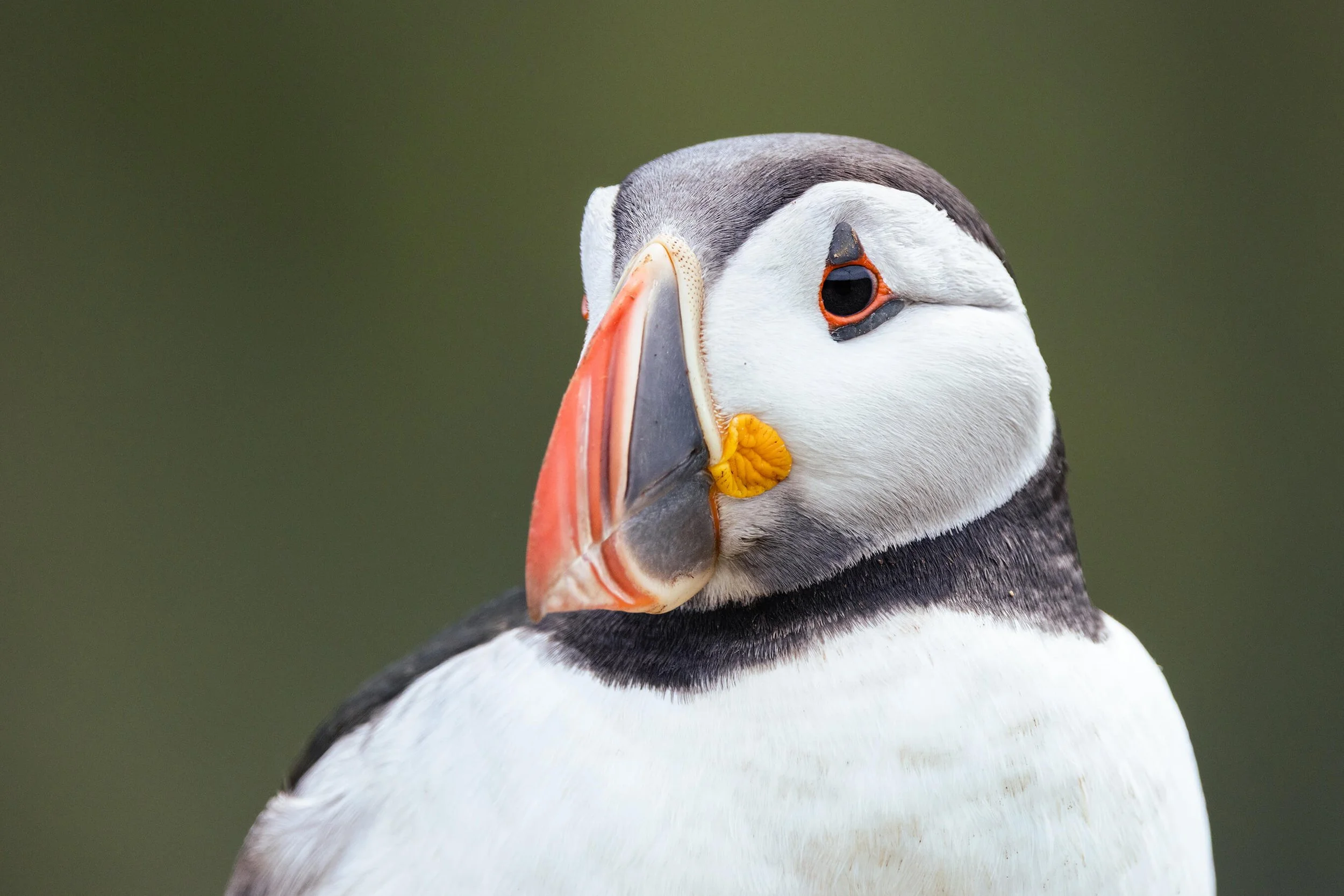
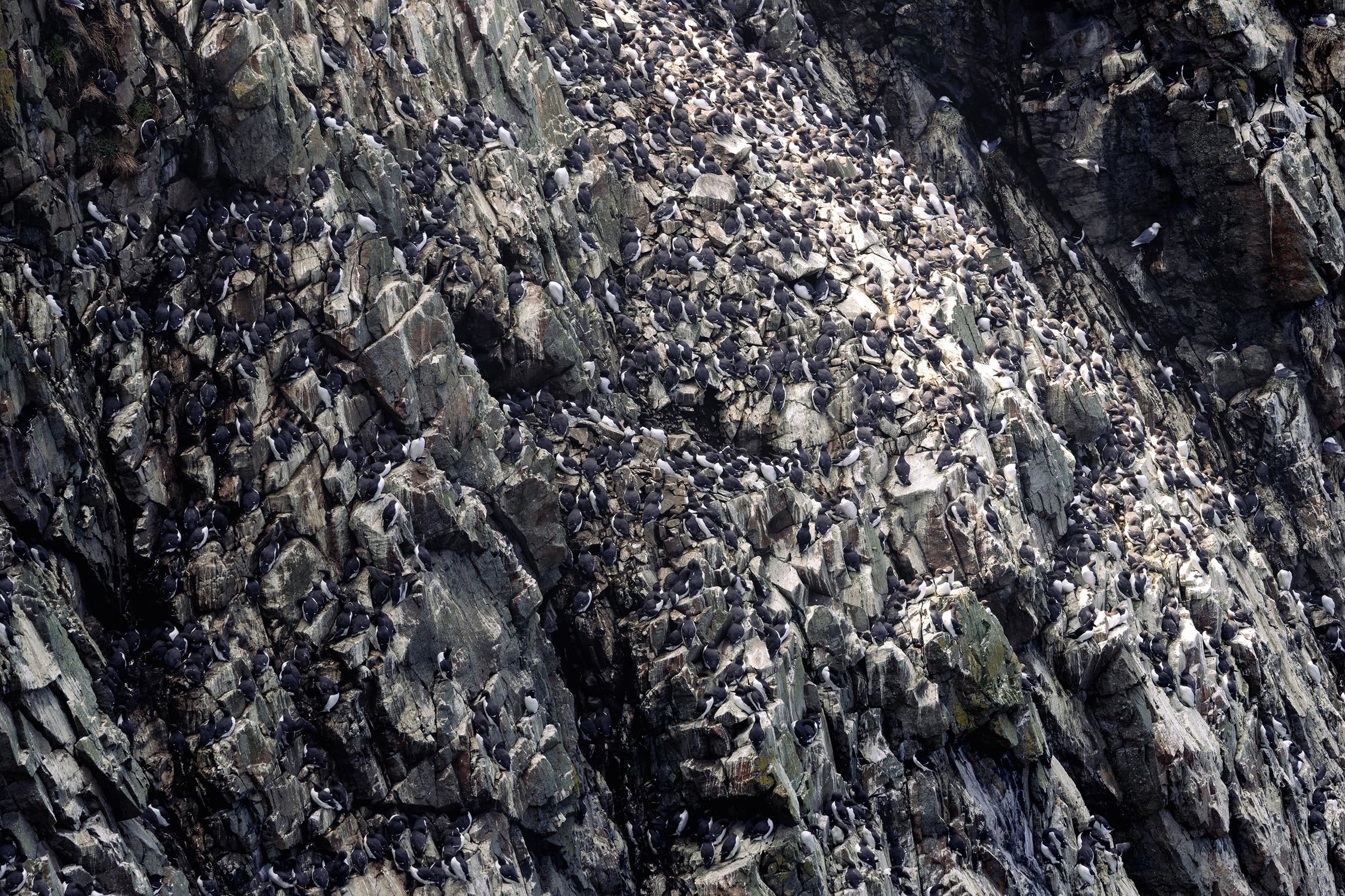
The Wick is a particular spot where puffins roost, with one side being grassy banks and wildflowers and the other side being exposed and rugged cliff edges. This allows for a variety of photo styles and is great fun to wander around snapping pics of the abundant puffins.
The puffins here are very tame and used to people being around. The path is fenced off, allowing the puffins plenty of space away from humans. However, many will roost right next to the path and will wander back and forth across the path around you. You can often find a puffin minding its own business right next to you, which is an amazing opportunity to get close-up shots. I think the puffins may find some solace in humans being around, as their biggest threat on the island - the gulls - will often swoop and steal their catch or even their pufflings. Humans act as a bit of a deterrent for the gulls, allowing the puffins to relax a little.
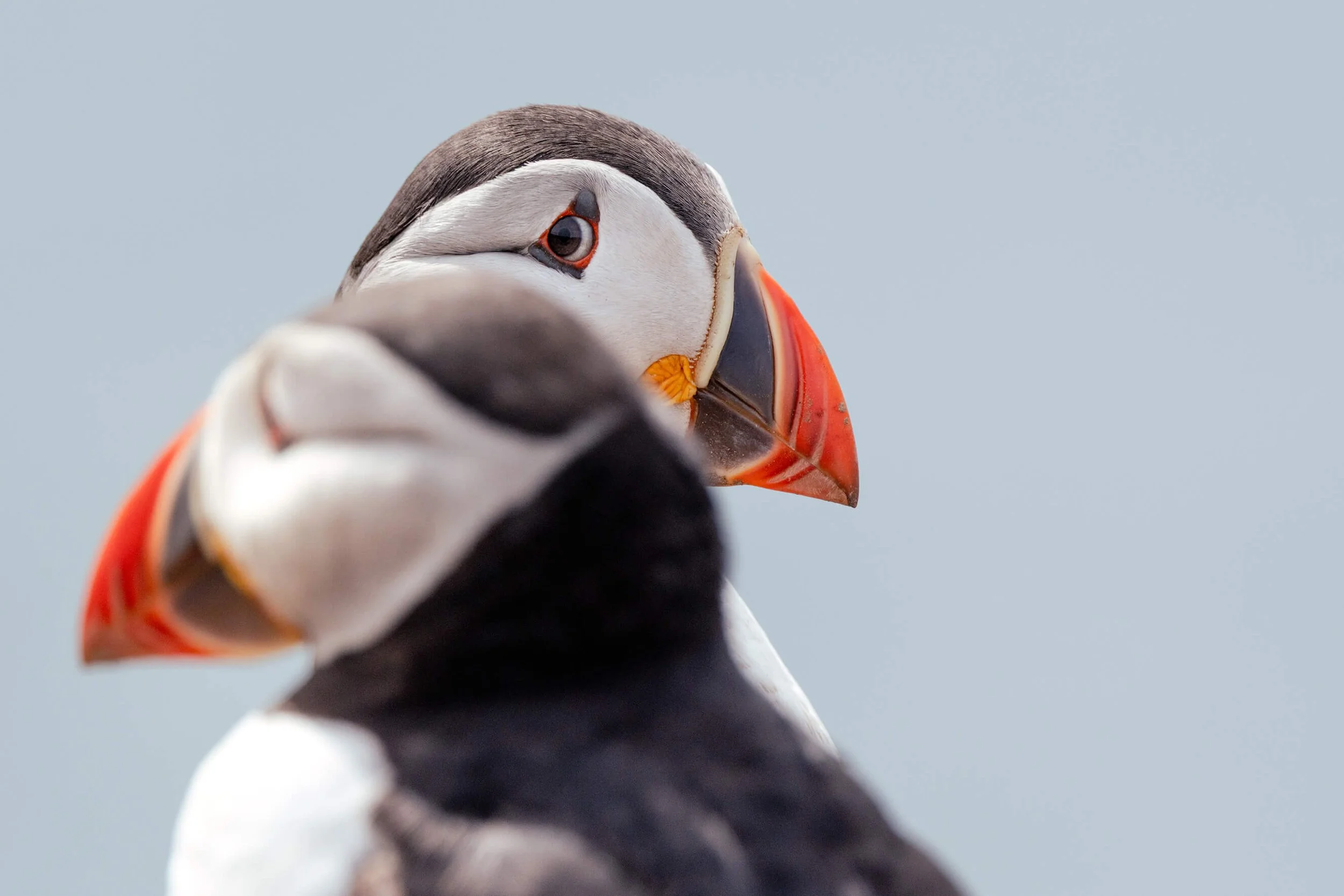
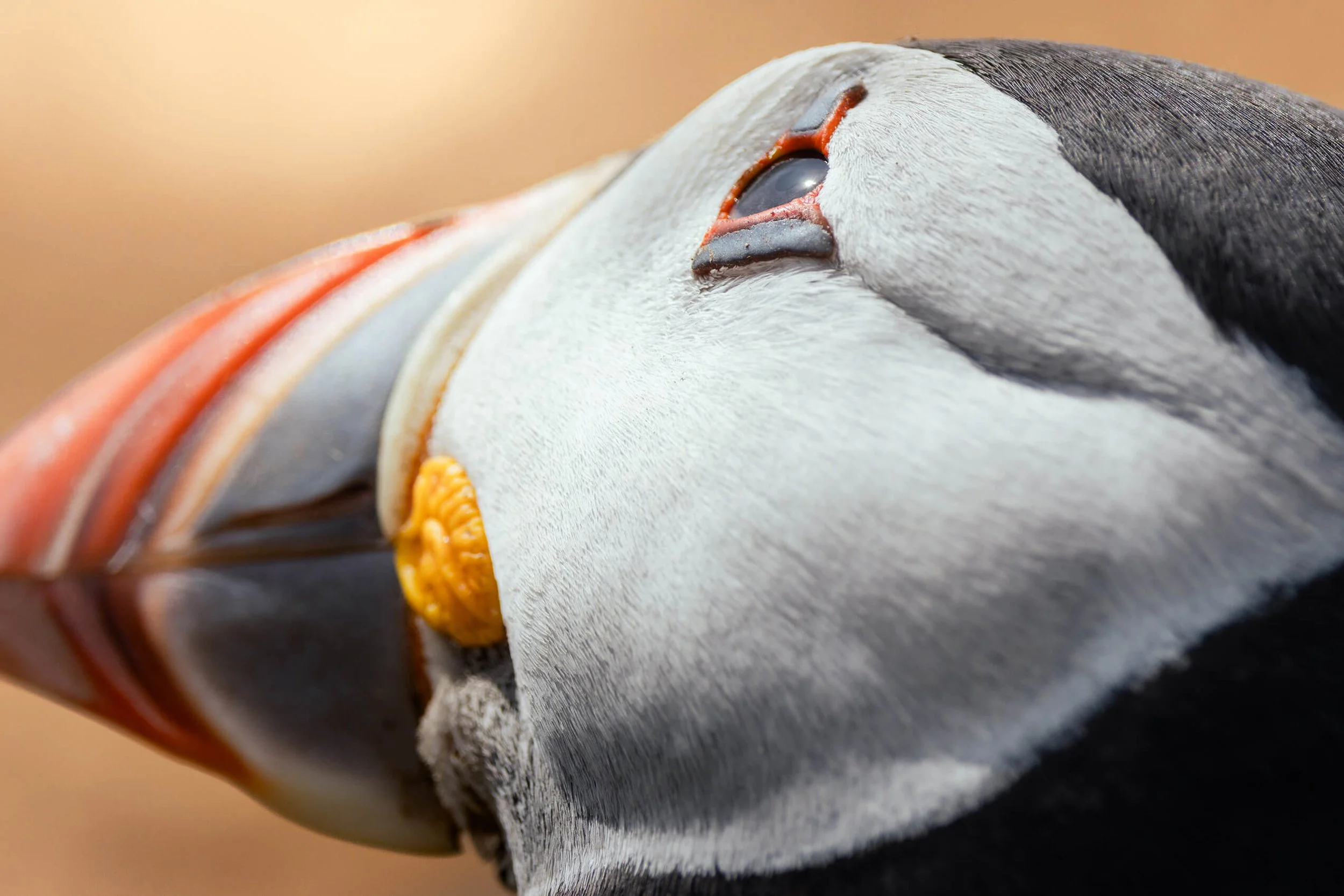
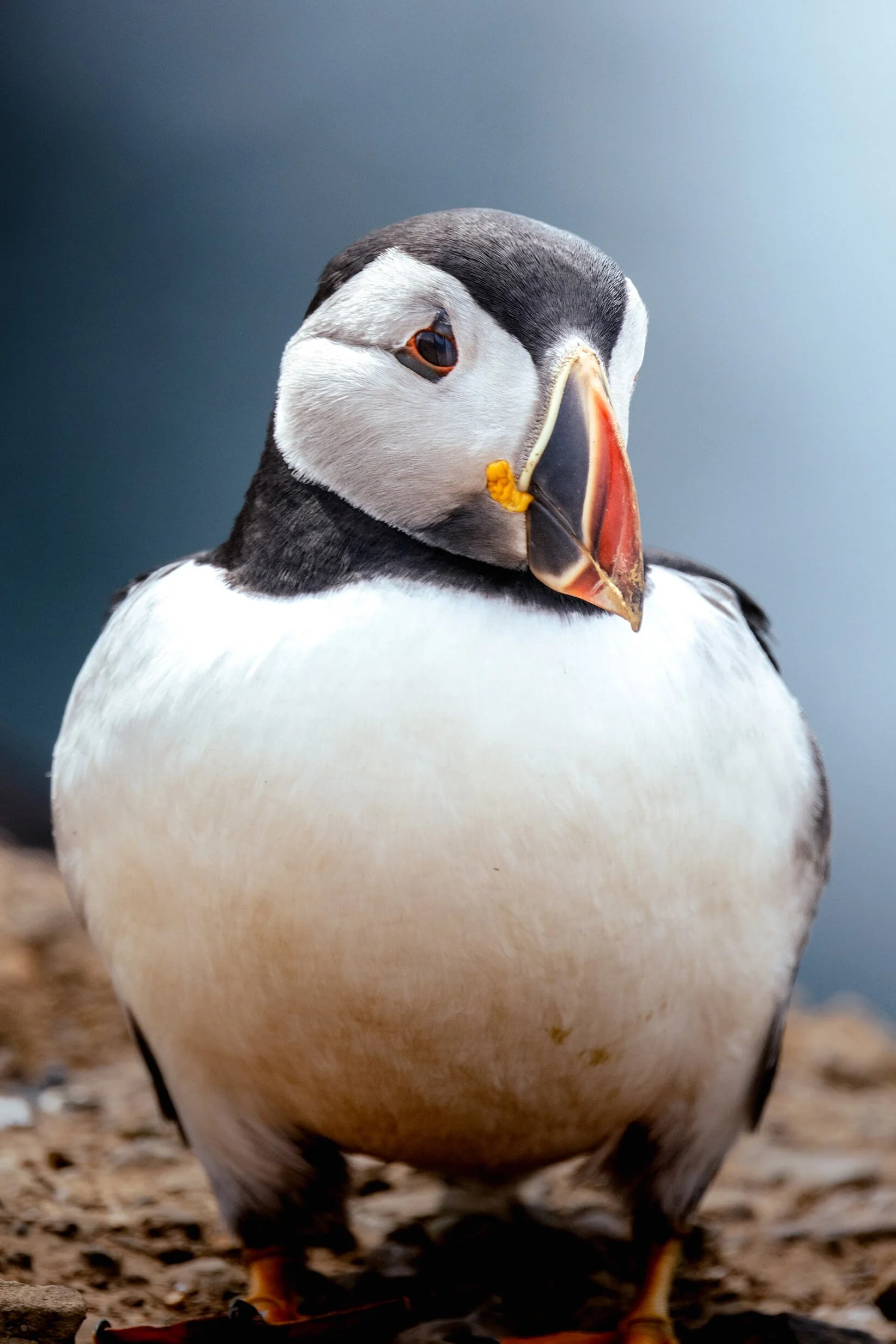
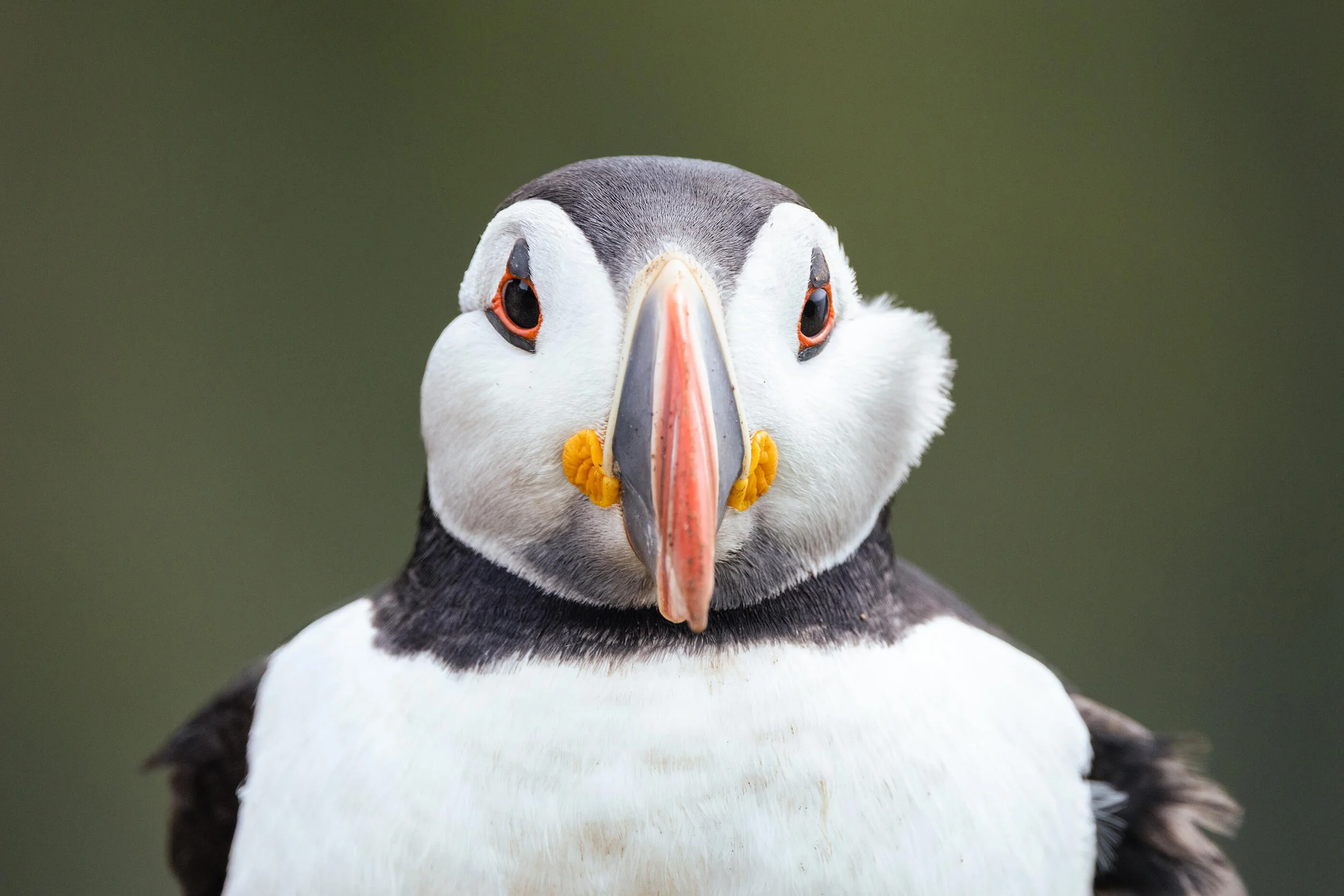
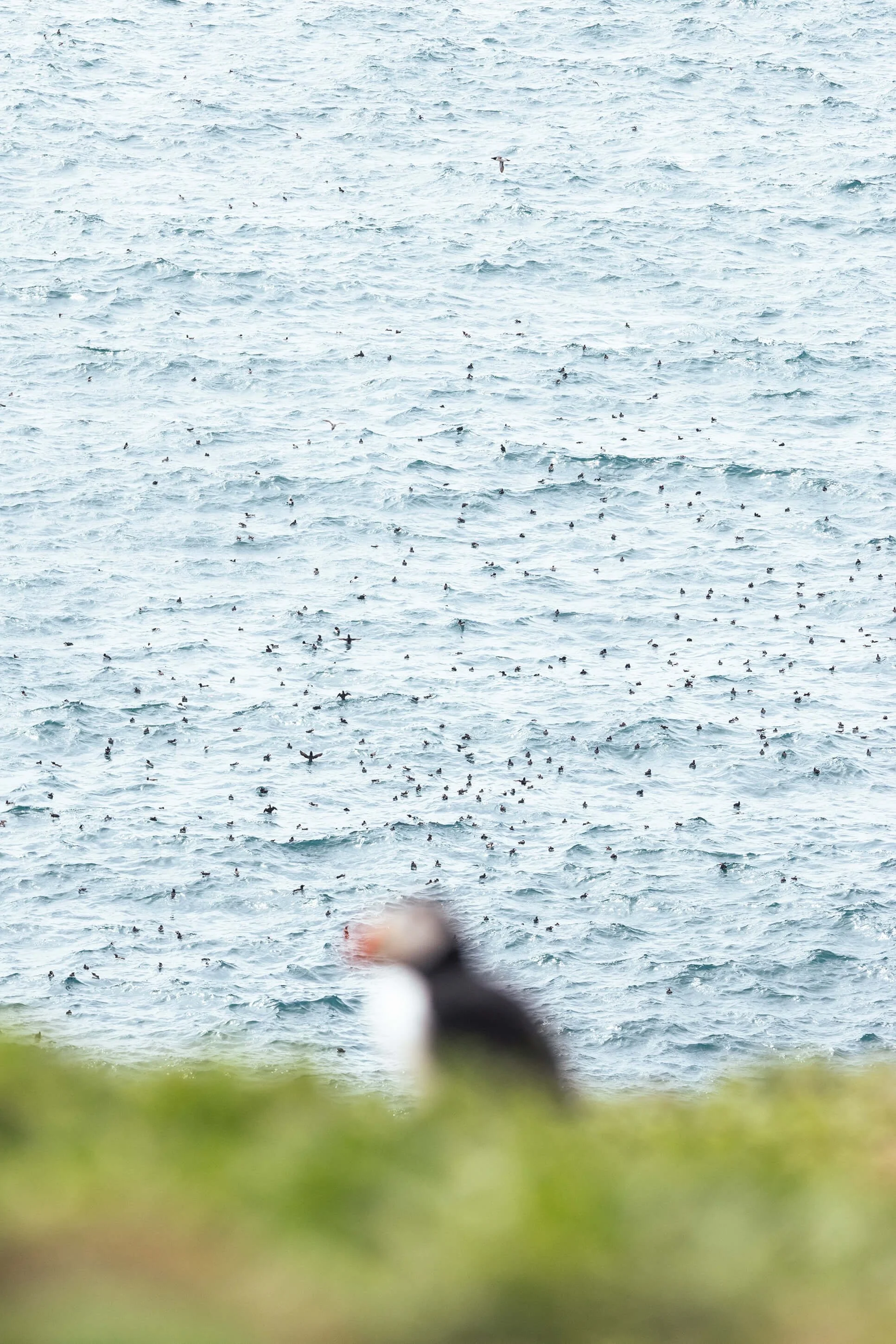
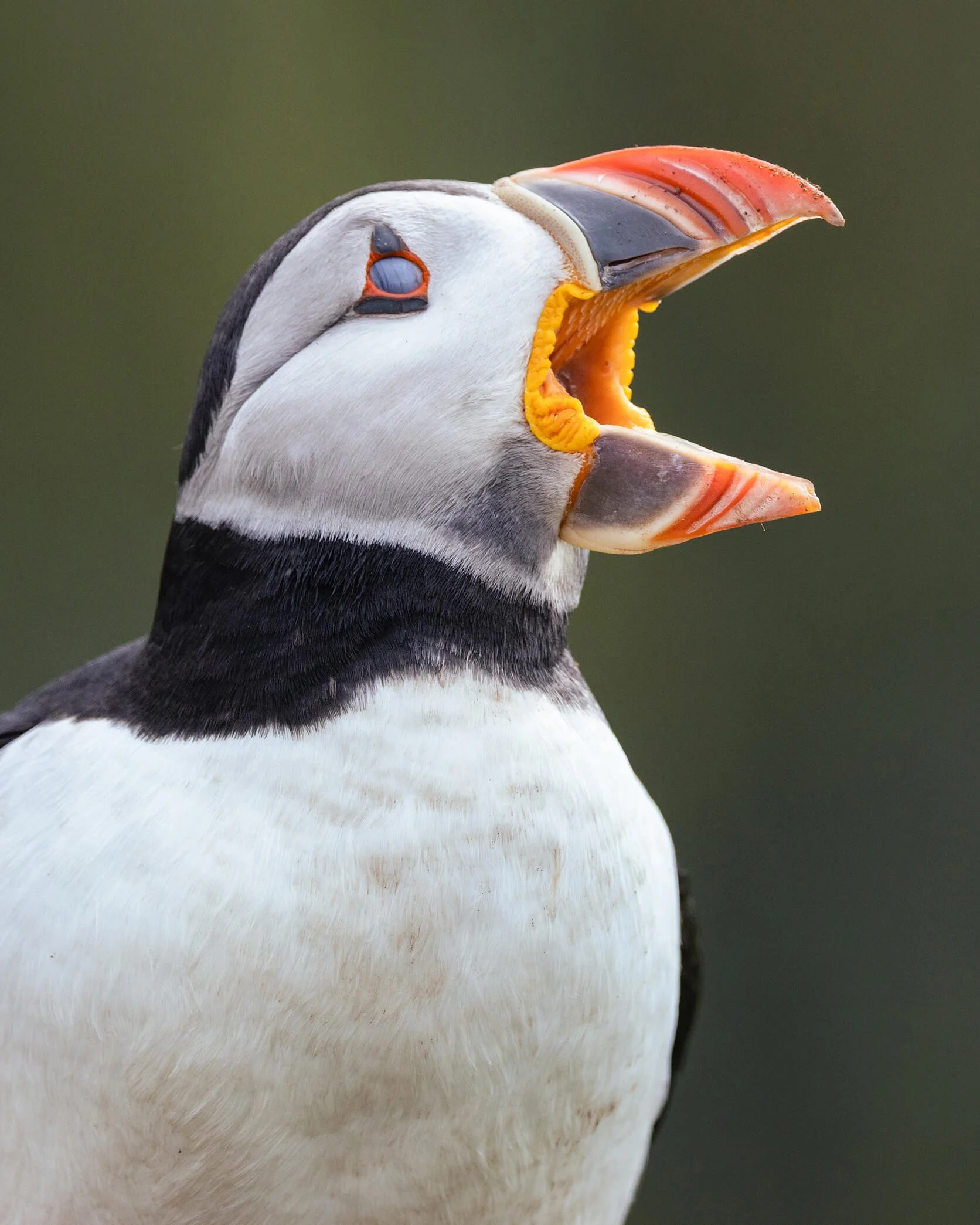
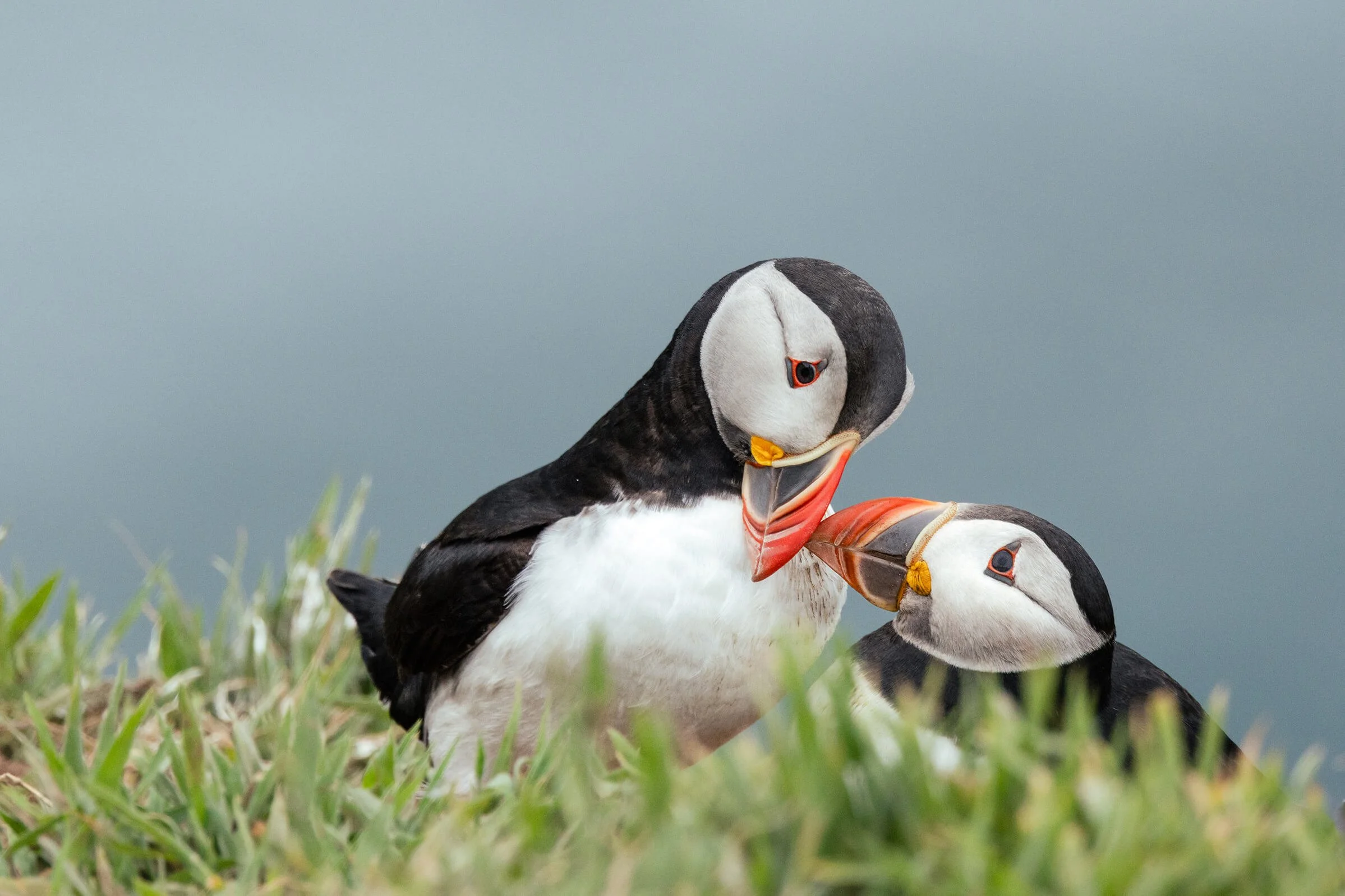
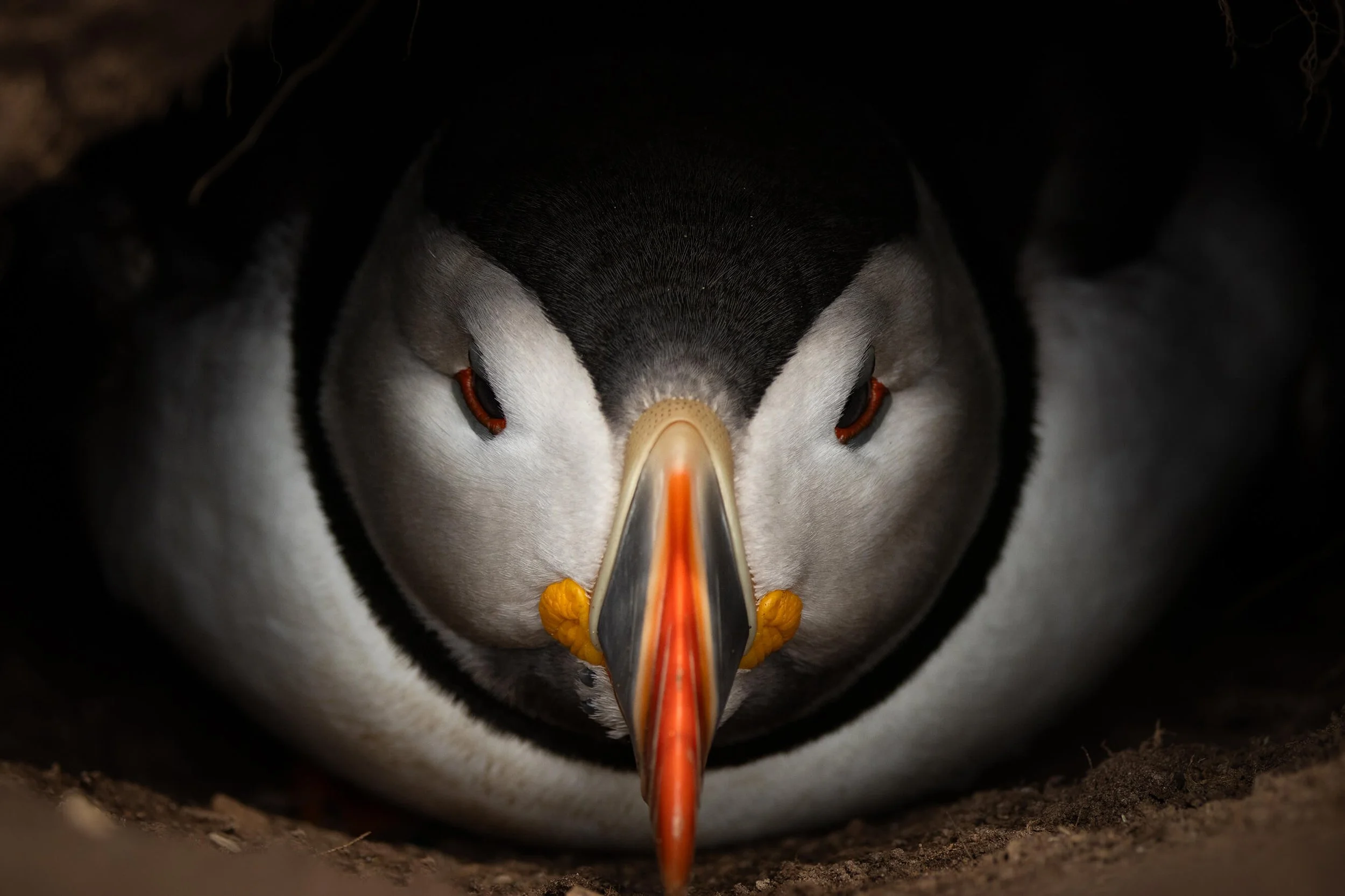

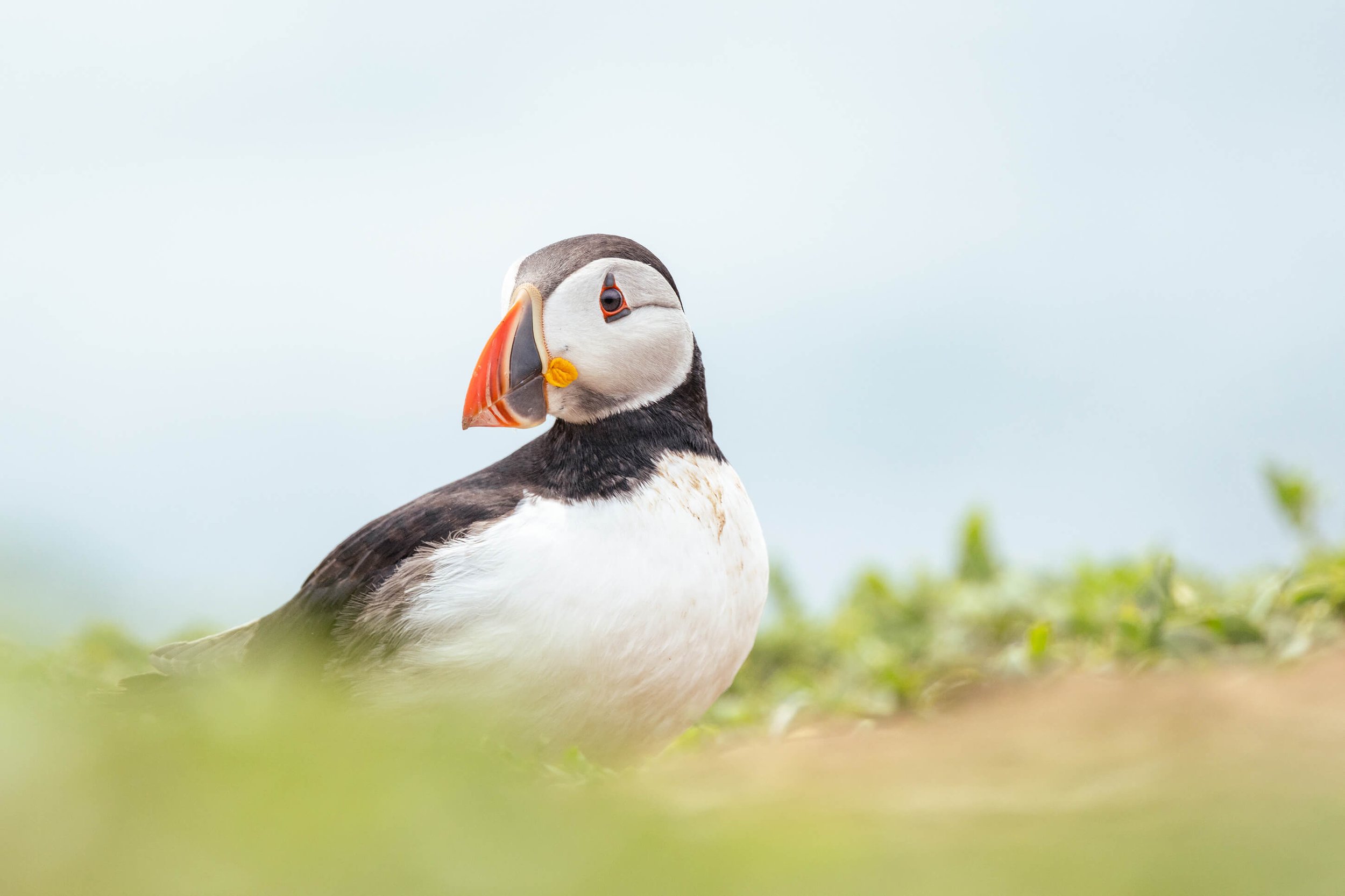
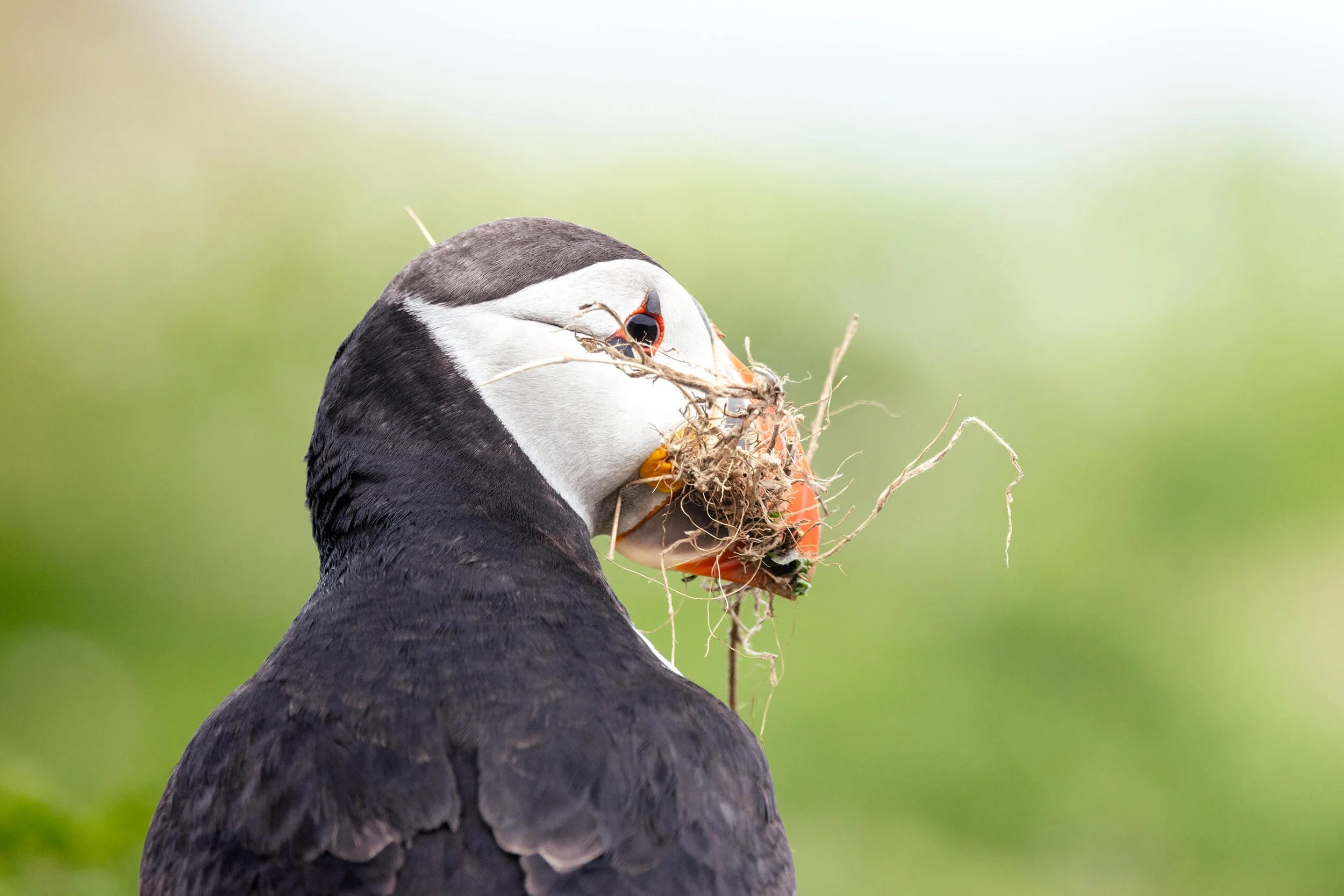
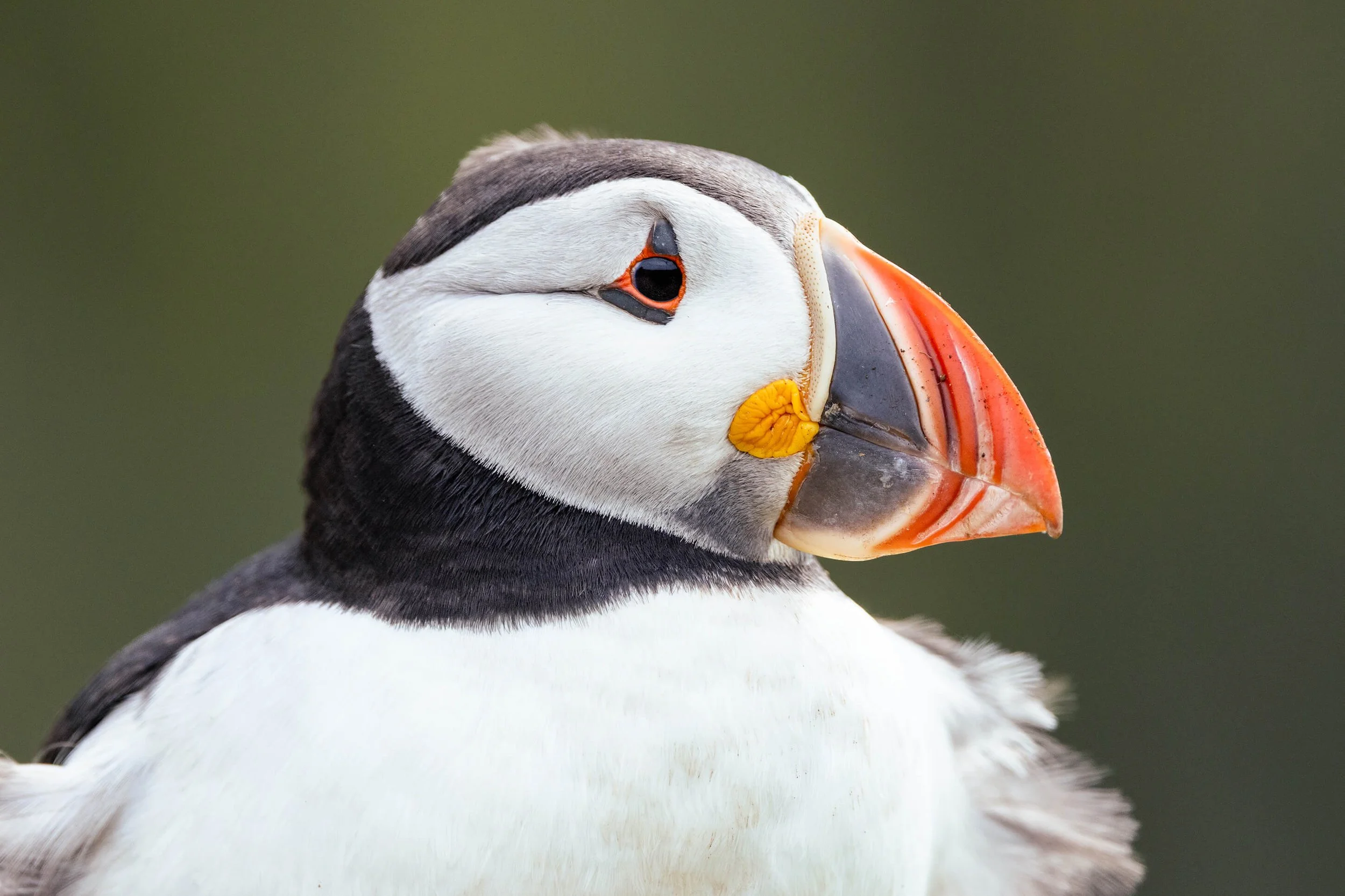
Following the path around back towards the ferry point, gives you the opportunity to capture some in-flight shots as they come to land on the grassy banks, often with beaks full of sand eels. They have to be quick however and scurry into their burrows before the gulls get to them and this makes it quite a challenge to capture photographs.

As well as puffins, skomer is also home to other Auk species such as Guillemots and Razorbills, songbirds like Skylarks, Pipits and Warblers, and other birds like Oyster Catchers and Jackdaws. There are even rabbits on the island, which due to lack of predators, are quite tame and will allow you to get quite close to photograph.
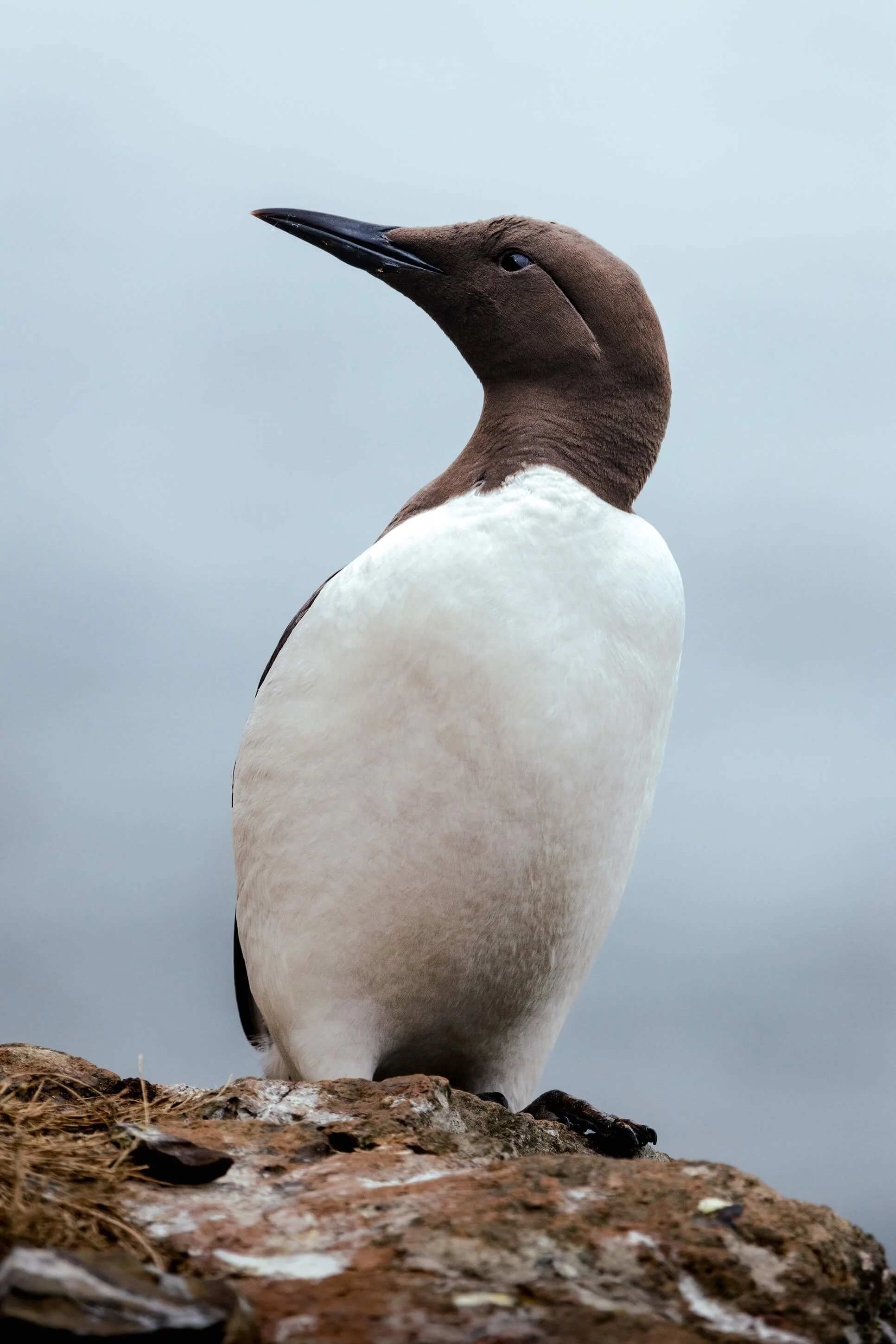

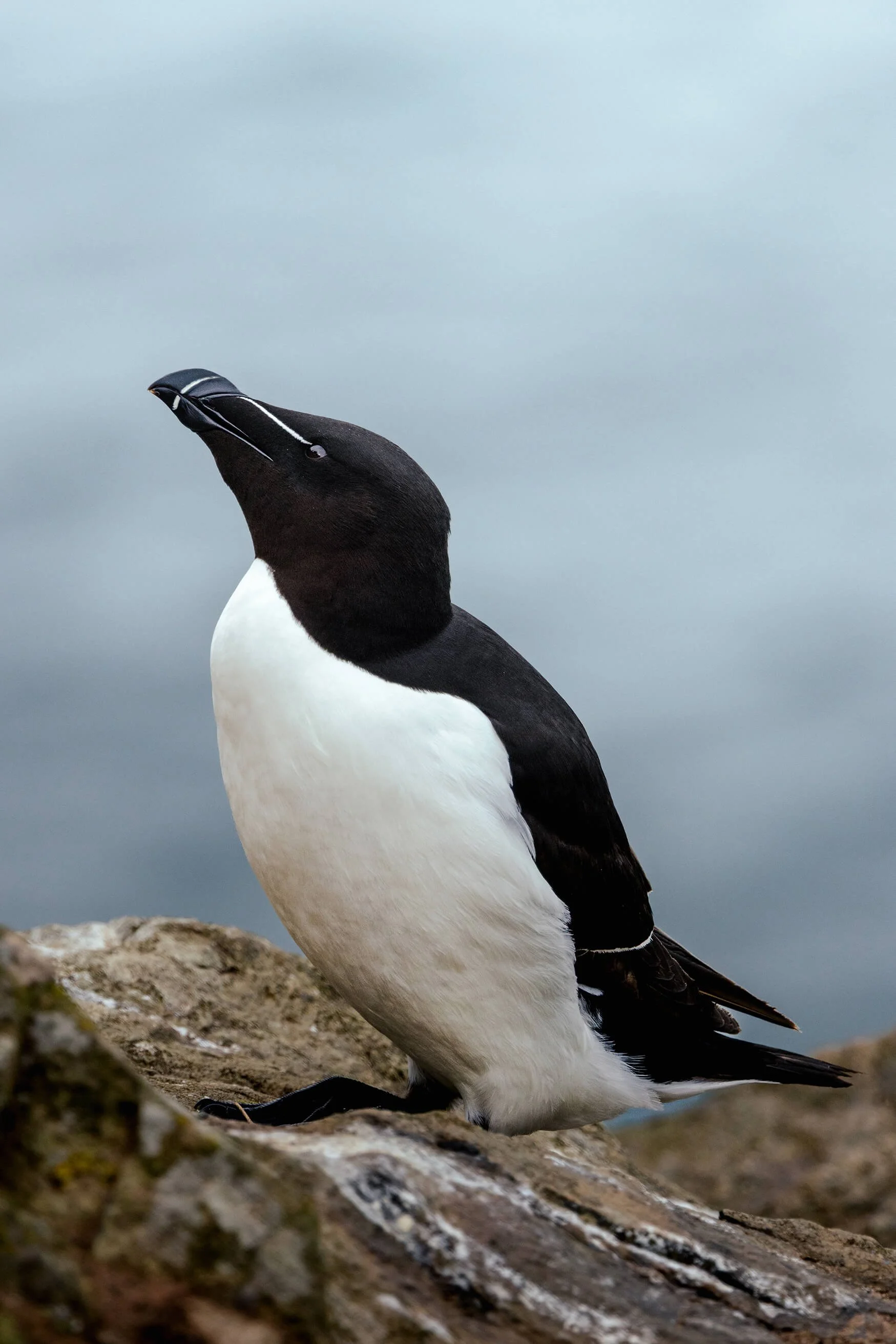
Going to Skomer in puffin season is a truly unique experience. I don’t know many other places where you can get so close to wildlife without causing stress or danger. I will definitely be returning in the future, maybe next time to stay on the island and hope for some nice golden hour shots.
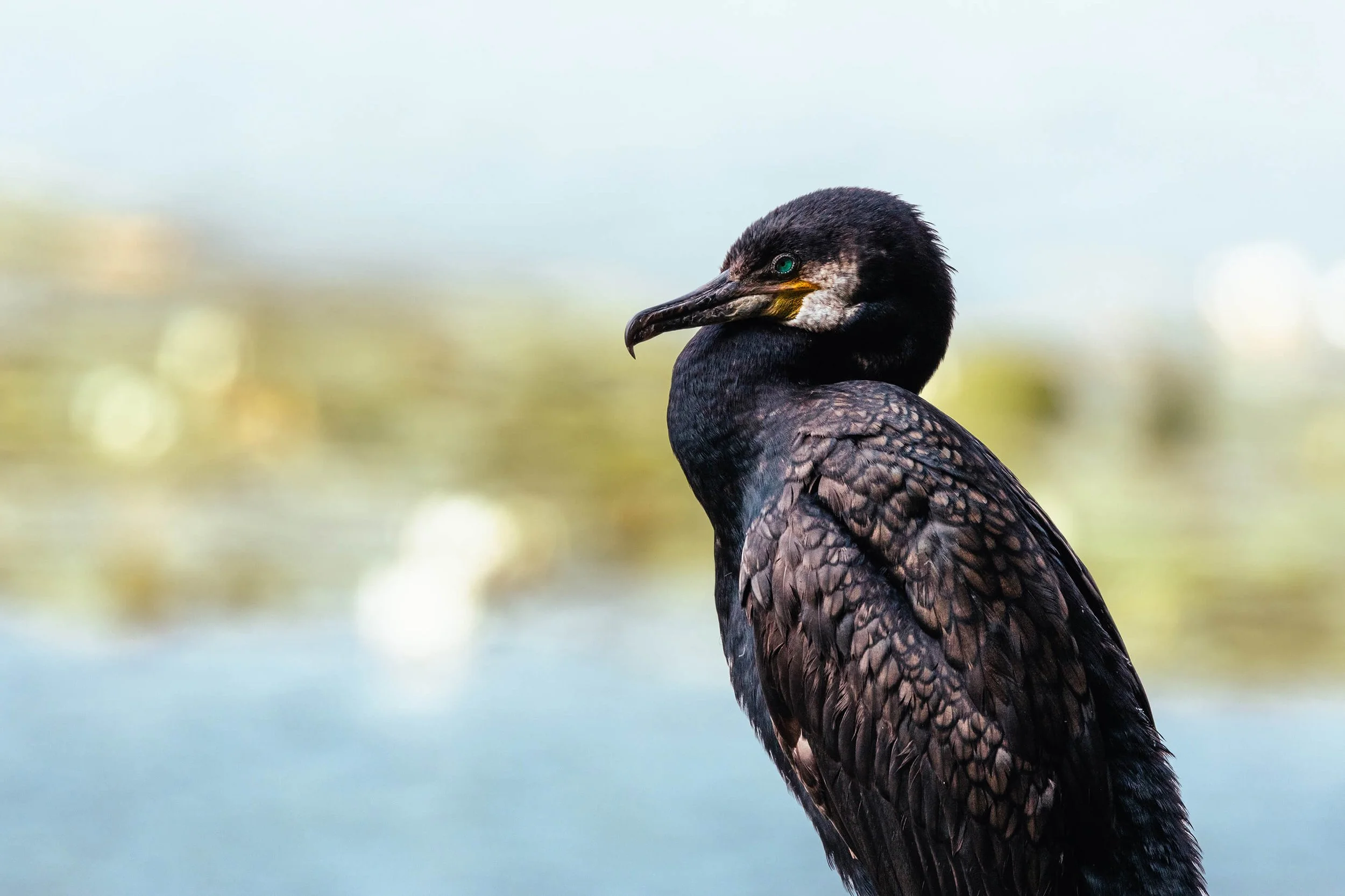
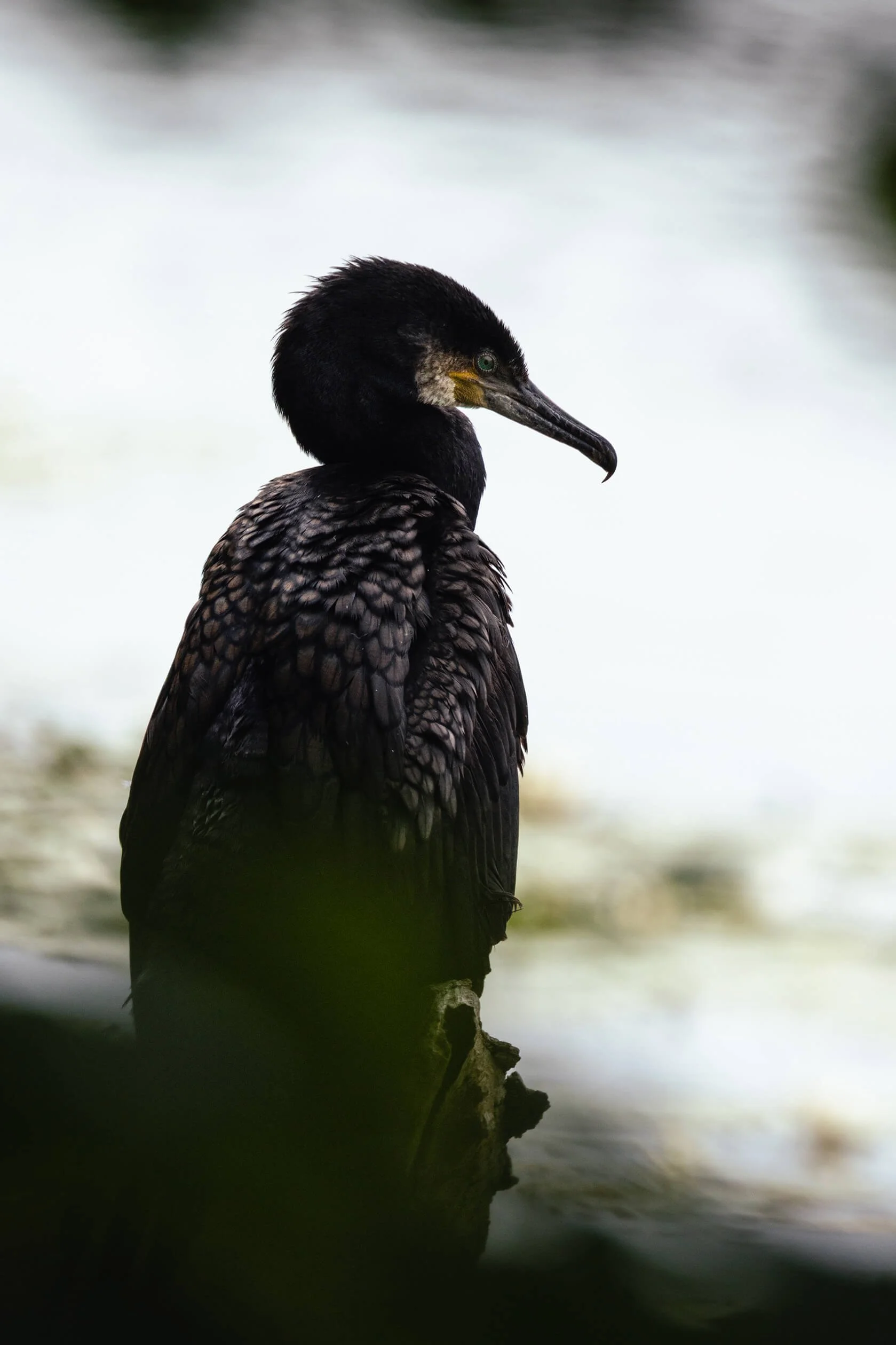
As well as visiting Skomer, we also spent some time around Pembrokeshire. We hiked up to Stackpole Head to see the seabird colonies there, spotting Razorbills, Guillemots, Gannets, Fulmers and even Choughs. We also walked around the beautiful Bosherton Lily Ponds, where I took some portraits of a stunning cormorant who posed perfectly for me right next to the footpath.


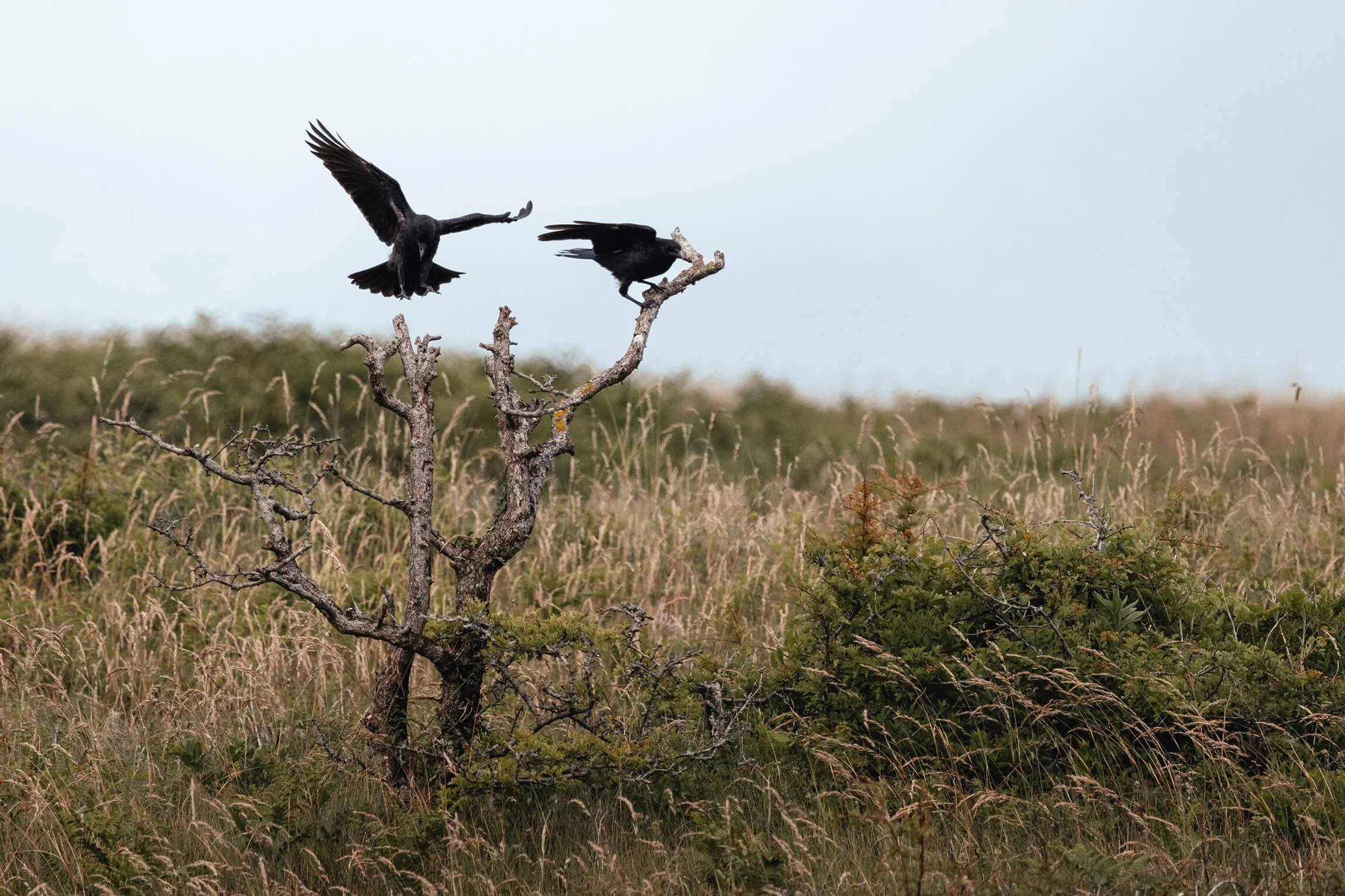
Since my last blog post, I have moved to Dartmoor to work on the Curlew Recovery Project. This is a hands-on role, headstarting Curlew to release back into the wild and raise their population. Curlew eggs are heavily predated by foxes and corvids, which has caused a big drop in their numbers in recent years. This project is extremely important for the conservation of Curlews and I am honoured to be a part of it.
Dartmoor is a stunning area of the UK. I have found I am surrounded by wildlife wherever I look, particularly birds. So while I’m here (for the summer), I hope to get out with my camera plenty of times and capture some of the creatures I come across. So stay tuned to see what I manage to find here (fingers crossed for Dippers and Barn Owls, and maybe a wild pony or two).
Thanks for reading.
C